
Under the Deck and Overly Welcome: A Homeowner's Guide to Skunks and Raccoons
Enjoying your deck is a quintessential part of life here in Colorado Springs. Whether you're grilling with a view of Pikes Peak or just relaxing in the evening, your outdoor space is a valuable extension of your home. But what happens when you realize you're sharing that space with some uninvited, four-legged guests? The dark, quiet space beneath your deck can seem like a five-star hotel for local critters like skunks and raccoons, offering them shelter and a safe place to raise a family. While they might seem harmless at a distance, having them take up residence can lead to property damage, unpleasant odors, and potential health risks for your family and pets. This guide will help you identify the signs of these unwanted tenants, understand the risks, and learn the most effective ways to reclaim your backyard.
Why Your Deck is a Prime Location for Wildlife
To a skunk or a raccoon, the space under your deck isn't just a random hideout; it's a perfect home. Understanding why they choose this spot is the first step in managing them effectively. These animals are driven by basic survival instincts, and your property often provides everything they need.
- Shelter: The area beneath a deck offers protection from the harsh Front Range weather, from summer heat to winter snow. It’s a dry, secure den that shields them from predators like coyotes and owls.
- Nesting Site: For a mother raccoon or skunk, a secluded crawl space is an ideal nursery to give birth and raise her young, safe from threats.
- Proximity to Food: Your home is likely near a consistent food supply. Whether it's unsecured trash cans, pet food left on the porch, a bird feeder, or even a garden, these opportunistic animals will take advantage of any easy meal. Once they find a reliable food source, they'll look for the closest, safest place to live—and that's often right under your feet.
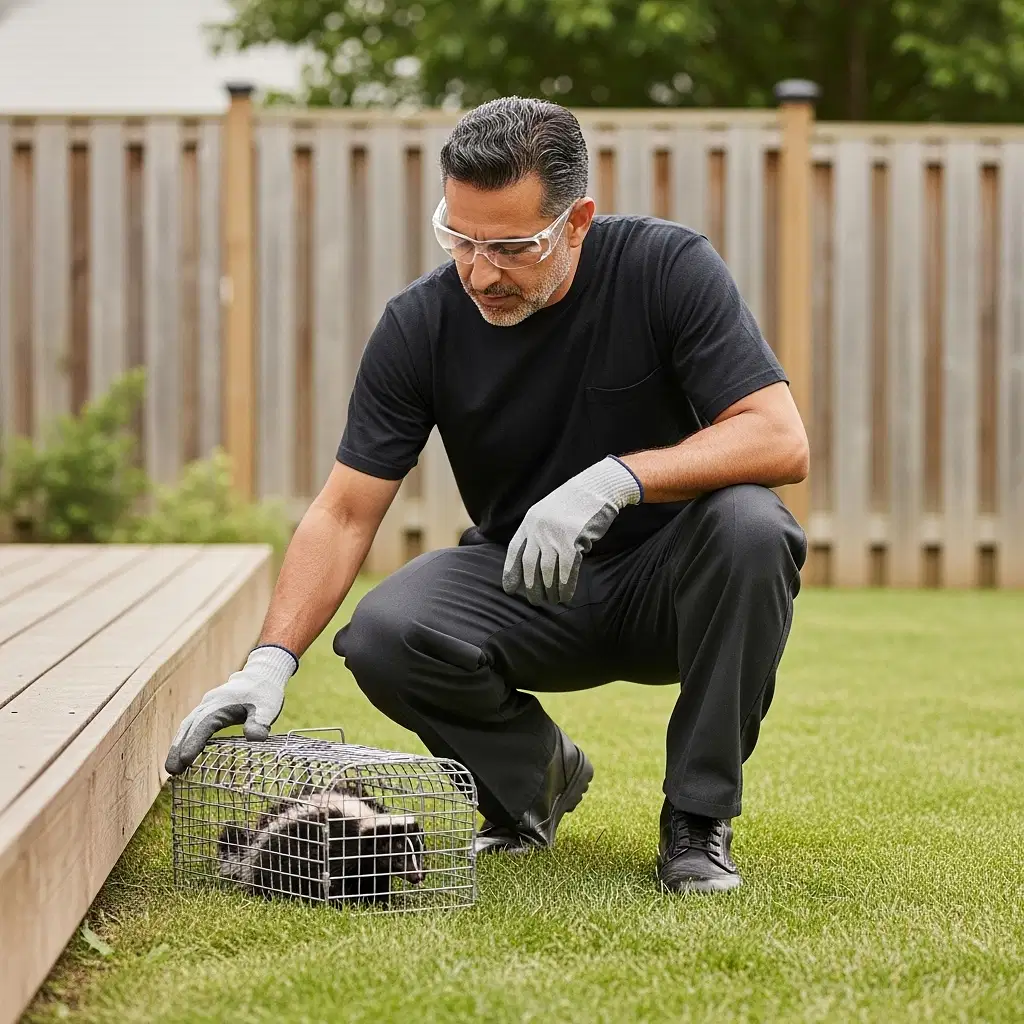
Identifying Your Unwanted Guest: Skunk or Raccoon?
Before you can solve the problem, you need to know exactly what kind of critter you're dealing with. Skunks and raccoons leave behind different clues, and identifying them correctly is key to a successful removal strategy.
Signs of a Skunk:
- The Smell: This is the most obvious sign. You may notice a faint, persistent, musky odor that gets stronger at dawn and dusk when skunks are most active. You don't have to be sprayed to smell that a skunk is nearby.
- Small Holes in the Yard: Skunks dig for grubs and insects, leaving behind small, cone-shaped holes in your lawn that are typically 3-4 inches deep.
- Tracks: Skunk tracks show five toes on both their front and hind feet, and you can often see their claw marks in the print.
Signs of a Raccoon:
- Messes and Damage: Raccoons are clever and strong. Look for tipped-over garbage cans, raided bird feeders, or damaged shingles and soffits if they've tried to access your attic.
- Noises: At night, you might hear sounds from under the deck, such as scratching, rustling, or unique vocalizations like chattering, growling, and purring.
- Tracks: Raccoon tracks are very distinct and look like tiny human handprints, with five long, finger-like toes.
The Dangers of DIY and the Value of Professional Removal
Once you've identified your guest, the immediate temptation might be to handle it yourself. However, attempting DIY wildlife removal can be ineffective and even dangerous. Both skunks and raccoons can carry diseases like rabies and parasites that are harmful to humans and pets. A cornered raccoon, especially a mother protecting her young, can be very aggressive. And of course, the primary risk with a skunk is getting sprayed—an experience that is intensely unpleasant and difficult to remedy.
Professional wildlife removal and relocation is always the safest and most effective option. At No Moore Pests, our trained technicians understand animal behavior and use humane, proven methods for both skunk removal and raccoon control. We ensure the animals are removed safely and in accordance with local regulations, and we can help you identify and seal entry points to prevent them from coming back. This approach not only solves your immediate problem but also provides long-term peace of mind.
Long-Term Prevention: How to Secure Your Deck for Good
Removing the current animal is only half the battle. To ensure you don't have new tenants moving in next season, you need to make your deck and yard less inviting. Prevention is the key to a lasting solution.
-
Install Exclusion Barriers: The most effective way to keep animals out from under your deck is to physically block their access. We recommend installing a tough, dig-proof barrier made of hardware cloth or other durable materials around the entire perimeter of the deck. This protection fencing should extend at least 12 inches underground to prevent animals from simply digging underneath it.
-
Eliminate Food Sources: Make your property less attractive by securing all potential food sources. Use trash cans with tight-locking lids, bring pet food and water bowls inside every night, clean your grill after each use, and pick up fallen fruit from trees.
-
Maintain Your Yard: A tidy yard offers fewer hiding places. Keep your lawn mowed, trim overgrown shrubs, and store firewood piles away from your house and deck. A well-maintained property is a less appealing habitat for nuisance wildlife.
Reclaim Your Deck with Professional Help
Your deck should be a place for relaxation, not a source of stress. By understanding why wildlife is attracted to your property, identifying the culprit, and taking professional steps for removal and prevention, you can ensure your outdoor space remains yours to enjoy. Trying to handle these critters on your own can lead to bigger problems, from lingering odors to property damage and safety risks.
If you suspect skunks or raccoons have made a home under your deck in the Colorado Springs area, don't wait. Contact No Moore Pests today for a professional inspection. We specialize in humane wildlife removal and can create a customized plan to safely evict your unwanted guests and secure your property for good.